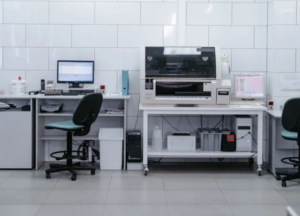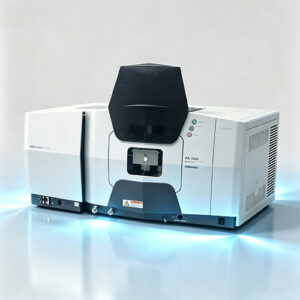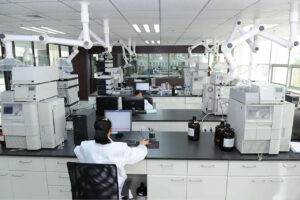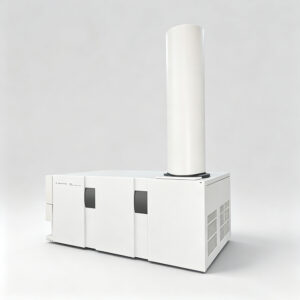

In mainstream application fields such as environmental VOCs testing, pesticide residue screening, pharmaceutical component analysis, and petrochemical component detection, gas chromatographs serve as core equipment for the separation and quantitative analysis of organic compounds, typically accounting for over 35% of a laboratory’s annual fixed asset investment. For start-up testing laboratories, university research teams with limited budgets, or established institutions that need to quickly supplement equipment for temporary projects, calibrated used gas chromatographs have become a rational choice that balances performance, cost, and delivery efficiency.
1. Why More and More Laboratories Are Choosing Used Gas Chromatographs
In recent years, the global testing industry has accelerated its instrument replacement cycle. A large number of well-conditioned units have been phased out from overseas scientific research institutions and domestic large-scale enterprise laboratories. After professional service providers complete in-depth maintenance and performance calibration, these devices can fully meet the methodological requirements of most conventional testing scenarios. Compared with brand-new equipment, compliant used gas chromatographs offer three core advantages:
- Significantly Reduced Upfront Investment: For less than 30% of the cost of a new unit, you can obtain complete analytical capabilities from mature models of leading international brands such as Agilent, Shimadzu, and Thermo Fisher. The funds saved can be allocated to consumable reserves, personnel training, or supporting laboratory renovations, avoiding squeezing the overall project budget due to a single equipment purchase.
- Greatly Shortened Delivery Cycle: There is no need to wait for the lengthy production, customs declaration, and approval processes for new instruments. In-stock units can be installed and commissioned on-site in a short time, perfectly matching temporary testing projects that need to go online within 1-2 months, preventing delayed equipment delivery from slowing down the overall project schedule.
- Lower Sudden Failure Losses: When a laboratory’s original gas chromatograph malfunctions unexpectedly, the 7-15 day return-to-factory repair period often leads to a large backlog of pending samples. Many samples with strict time limits will directly lose their testing value due to property changes. A backup used gas chromatograph can quickly fill the gap and ensure continuous testing operations.
2. Mainstream Tiers of Used Gas Chromatographs in the Current Market and Their Applicable Scenarios
Compliant used gas chromatographs in domestic circulation can be clearly divided into three tiers by brand camp. Units in different tiers are precisely adapted to usage scenarios with different budgets and testing accuracy requirements:
- Tier 1 (Mature Models from Leading International Brands): Models such as Agilent 6890N, 7890A, 7890B, 8860, 8890, Shimadzu GC-2014C, GC-2010Plus, and Thermo Fisher iConnect series, with a market share of about 62%. Their core component stability has been verified by large-scale use in laboratories around the world for more than a decade, making them the top choice for third-party testing agencies, pharmaceutical enterprises, and environmental monitoring laboratories. The Agilent 6890N supports multiple detector options and built-in autosampler control functions, suitable for routine high-volume sample testing in the pharmaceutical and chemical industries. The Thermo Fisher series supports offline maintenance of inlets and detectors, so individual modules can be cleaned without affecting the operation of the rest of the system, adapting to high-frequency usage scenarios with multiple parallel projects.
- Tier 2 (Commercial Models from Leading Domestic Manufacturers): Mature commercial models produced by mainstream domestic chromatography instrument manufacturers, with a market share of about 28%. Their operation logic fits the usage habits of domestic users, and the subsequent consumable procurement cost is lower, making them suitable for scenarios with moderate testing accuracy requirements such as university basic teaching and routine food screening with limited budgets.
- Tier 3 (Idle Equipment from Niche Brands): Near-new units purchased temporarily for specific projects and then left unused, with overall working conditions close to brand-new status, accounting for about 10% of the market. They are suitable for supplementary configuration needs in specific niche testing scenarios.
3. 6 Quantifiable Verification Dimensions for Professional-Grade Selection
When purchasing a used gas chromatograph, you do not have to rely entirely on the manufacturer’s promotional materials. All core parameters can be verified one by one through on-site sampling testing and acceptance after delivery. By filtering layer by layer according to the following 6 strict standards, you can avoid the potential risks of most non-standard equipment:
- Detector Performance Verification: The detection limit of a conventional FID detector should be lower than 5pg C/s (propane) to meet the testing requirements of most conventional organic components. For FPD detectors used in pesticide residue and petrochemical testing scenarios, the sensitivity for sulfur elements should be more than 5 times that of early ordinary models, and the sensitivity for phosphorus elements should be more than 10 times that of early ordinary models. For ECD detectors used in halogenated hydrocarbon testing, the response value must fully comply with the requirements of the corresponding industry testing standards.
- Column Oven Temperature Control Parameter Verification: The temperature control range of a conventional commercial column oven should cover from room temperature +4℃ to 450℃, with no less than 20 programmed temperature ramps, and the temperature control accuracy deviation should not exceed 0.01℃, ensuring the separation effect of complex components and the reproducibility of retention time.
- Inlet Control Parameter Verification: The pressure setting range of the split/splitless capillary inlet covers 0 to 100psi, and extended models can support 0 to 150psi. The total flow setting range for nitrogen carrier gas covers 0 to 200ml/min, ensuring flexible adaptation to methods for different chromatographic columns.
- Operation & Maintenance Friendliness Verification: Prioritize models that support tool-free disassembly and assembly of inlet and detector modules, which can reduce the time required for routine daily maintenance by more than 70%. Models equipped with low thermal mass fast start-up functions can reduce energy consumption during a single boot preheating process by about 40%, making long-term operation more cost-effective.
- Compliance Adaptation Verification: Models with built-in regulatory compliance functions can be directly connected to the quality control data management systems of various testing laboratories without additional secondary development and adaptation, ensuring that the test reports issued meet the latest industry standard requirements.
- Expansion Compatibility Verification: Choose models that are compatible with peripheral accessories such as autosamplers, headspace samplers, purge and trap systems, and thermal desorbers. The subsequent investment cost for function expansion can be reduced by 60%, and there is no need to replace the whole unit to adapt to new testing projects.
4. The Full-Range Services We Can Provide for You
As a professional domestic service provider of used analytical instruments, our in-stock inventory covers a full series of used gas chromatographs from mainstream brands including Agilent, Shimadzu, Thermo Fisher, and PE. Every unit undergoes no less than 15 hardware function tests after being put into storage, covering core indicators such as inlet air tightness, detector response value, and column oven temperature uniformity, to ensure no abnormal drift during 72 hours of continuous operation.
- On-site machine inspection is supported. You can bring actual samples to conduct on-site test runs to intuitively check pressure stability, baseline noise, and retention time reproducibility.
- Before delivery, all units are strictly calibrated according to factory specifications, and we provide on-site installation, commissioning, and 2-3 days of on-site operation training.
- All units come with a clear warranty service. Most regions in China can achieve on-site response within 24-48 hours to quickly solve various problems encountered during subsequent operation.
- We also provide a full range of used analytical instruments such as liquid chromatographs, mass spectrometers, and spectrometers, to meet the multi-equipment configuration needs of laboratories in one stop.
Whether you are building a new laboratory to control procurement costs, or need to quickly supplement equipment to cope with temporary testing projects, you can contact us to get a customized selection solution adapted to your testing scenarios, and build a stable and reliable analytical testing platform with a more reasonable investment.